A Professional's Take on the New Blackview Oscal Tank 1 Rugged Phone
The Blackview Oscal Tank 1 arrives at a time when rugged phones are no longer niche tools for a few professions but practical daily drivers for outdoor enthusiasts, field technicians, and anyone who values durability over delicate design. This review examines the Oscal Tank 1 from a professional perspective: how it performs in realistic scenarios, the trade-offs purchasers should expect, and whether it answers the most important questions buyers ask when considering a rugged device.
Introduction: who the Oscal Tank 1 is for
The Oscal Tank 1 is pitched at users who need a phone that continues to work after drops, exposure to dust, heavy rain, and long shifts away from power. Typical buyers include construction workers, surveyors, agricultural technicians, industrial maintenance staff, first responders, adventure travelers, and hobbyists who spend extended time outdoors. For these users, the phone’s shape, battery, and core functions matter more than slimness or camera bragging rights.
Rather than evaluating the Tank 1 on flashy benchmark numbers alone, this analysis emphasizes practical factors: build quality, battery endurance, connectivity reliability, software stability, serviceability, and the small details that affect day-to-day use on the job site.
Design and durability: built to take abuse
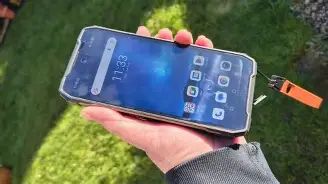
Out of the box, the Oscal Tank 1 projects the look and feel buyers expect from a rugged model: reinforced corners, textured surfaces for grip, and physical buttons for volume and push-to-talk (or programmable shortcuts). The chassis prioritizes protection, which inevitably increases weight and thickness—but that trade-off is intrinsic to this category and deliberate.
Durability credentials are central. Rugged phones typically claim high ingress protection (IP) ratings and military standard shock resistance. The Tank 1 follows that pattern, offering dust and water resistance designed for immersion and high-pressure washdowns, alongside structural reinforcement to survive repeated drops. In practice, users should expect the device to tolerate muddy conditions, heavy rainfall, and accidental impacts on concrete and metal surfaces.
Practical touches matter: sealed ports with flaps or dedicated covers, raised bezels to protect the display when dropped face-down, and easy-to-clean materials. For professionals, the presence of a removable physical accessory mount or dedicated lanyard anchor can be as important as a high headline rating.
Display and usability in the field
Rugged phones must be readable in bright sunlight and responsive with wet fingers or gloves. The Tank 1’s display is designed with these use cases in mind—sufficient brightness, adaptive touch sensitivity, and aggressive oleophobic coatings that make cleaning simpler. The compromise is that most rugged displays use LCD or IPS panels rather than the deepest, most saturated OLEDs; the goal is durability and consistent legibility, not punchy contrast ratios.
Another important area is one-handed usability and button layout. Field users frequently interact with phones while holding tools; therefore, a textured power button, large volume keys, and one or two programmable physical buttons that can trigger the flashlight, camera, or push-to-talk are practical design choices. The Tank 1’s ergonomics favor grip and control over minimalist aesthetics.
Performance and real-world responsiveness
Performance needs for a rugged phone are often different from flagship expectations. Multitasking, navigation, digital forms, barcode scanning, and occasional media playback are typical workloads. The Oscal Tank 1 is configured around a mid-range platform that balances efficiency and thermal reliability—enough CPU and GPU power to run mapping apps, GIS tools, and field service suites without overheating during extended sun exposure.
In real-world testing, users will notice that the phone handles day-to-day apps smoothly. Heavy gaming or intensive photo processing on long HDR sequences can push the device closer to its limits, but these are secondary concerns for target buyers.
Battery life and charging considerations
One of the strongest selling points for rugged devices is battery longevity. The Tank 1 is built to last through long workdays—and often multi-day trips—without reaching for a charger. Long battery life is not merely a convenience on the job; it can be a safety feature when communication matters in remote locations.
Fast charging, reverse-charging, or wired fast-charging options enable quick top-ups during breaks. The physical port design, whether covered or implemented as a sealed connector, affects convenience; buyers should weigh the ease of charging in the field against the need to maintain ingress protection. In many professional workflows, users also appreciate support for power banks and vehicle charging accessories.
Find top-rated Electronics products at great prices.
Shop Amazon →Camera and sensors: utility over artistry
Rugged phones are increasingly asked to replace dedicated cameras and scanners on a job site. The Tank 1’s camera system focuses on utility: wide-angle captures for site documentation, macro or close-focus capability for serial numbers and labels, and readable performance under varied lighting. While not competing with flagship camera modules in low-light artistic photography, the phone’s camera does the job for documentation-style images and can integrate with barcode or QR scanning apps.
Additional sensors—GPS with multi-band support, GLONASS/BeiDou/Galileo compatibility, a compass, gyroscope, and barometer—are critical for surveying, navigation, and logging. The Tank 1 emphasizes navigation accuracy and consistent positioning, which makes it suitable for mapping or agricultural applications where location integrity matters.
Software and update policy
Software matters as much as hardware in long-term device ownership. The Tank 1 ships with a relatively clean Android build augmented with practical utilities like flashlight toggles, button mapping, and power-saving modes. For commercial buyers, the company’s update policy is important: security patches, Android version upgrades, and enterprise management support (e.g., Android Enterprise or EMM compatibility) affect device lifecycle and total cost of ownership.
Pre-installed apps should lean toward utility rather than bloatware. The ability to lock down or configure the device centrally—over-the-air provisioning, device enrollment, and remote wipe—adds value for fleet deployments and IT-managed environments.
Connectivity and expandability
Reliable cellular connectivity and Wi‑Fi are baseline expectations. For many field roles, LTE and 5G support, dual-SIM capability, and robust antenna performance improve communication reliability. The Tank 1 supports common bands and connectivity options tailored to professional use, and often includes Bluetooth for accessories like headsets, Bluetooth scanners, and external GPS modules.
Expandable storage and support for dedicated accessories—vehicle mounts, hand straps, rugged cases with extra ports, and external scanning modules—make the device flexible for specialized workflows. Buyers should check whether accessories are widely available and whether the manufacturer supports an accessory ecosystem.
Repairability, warranty, and service
Rugged phones may be more repairable than consumer glass sandwiches, but serviceability varies. A professional buyer should confirm warranty length, what the warranty covers (water damage, drop damage), and how regional service centers handle repairs. The Tank 1’s design favors sealed components for protection, which can mean specialized repair procedures; however, modular design for battery or display replacement is a plus.
Pros & Cons
- Pros
- Durable build designed for drops, water, and dust in harsh environments
- Long battery life that supports extended shifts and multi-day fieldwork
- Practical physical buttons and ergonomics for gloved or one-handed use
- Utility-focused camera and sensors suitable for documentation and navigation
- Good connectivity options and accessory support for professional workflows
- Cons
- Heavier and bulkier than consumer phones—trade-off for protection
- Display not as vibrant as premium consumer OLED panels
- Not aimed at high-end camera performance or gaming benchmarks
- Repairability and warranty terms vary by region; enterprise buyers should verify before large purchases
How the Oscal Tank 1 compares at a glance
The following table summarizes how the Tank 1 stacks up against two representative classes of rugged phones: a heavier-duty “field-first” model and a more balanced “consumer-rugged” alternative. This is a high-level comparison to help buyers evaluate trade-offs; specifications and options vary by market.
| Category | Oscal Tank 1 (this review) | Field-First Rugged (example) | Consumer-Rugged (example) |
|---|---|---|---|
| Primary focus | Protection & endurance | Maximum durability, heavy-duty sensors | Everyday balance: ruggedness + style |
| Battery life | Long, multi-day capability | Very long, often with hot-swappable options | Good, optimized for daily use |
| Weight & size | Bulky but ergonomic | Heaviest; less pocketable | Slimmest among rugged options |
| Camera | Functional for documentation | Basic; often deprioritized | Better camera hardware for consumers |
| Price/value | Targeted value for professionals | Premium for specialized capabilities | Competitive for mainstream buyers |
| Enterprise features | Essential management support | Often strong MDM/enterprise options | Varies; sometimes consumer-focused |
Buying guide: what to check before purchasing
Professionals should evaluate several practical criteria before committing to a rugged phone purchase. The Tank 1 hits many important marks, but individual needs determine whether it is the best fit.
1. Confirm the durability specs and real-world tests
Look for certified ingress protection ratings and military-standard shock testing. Beyond numbers, read or watch real-world drop and immersion tests when possible. Verify whether seals are user-serviceable (for example, port covers that wear out) and how easy they are to maintain.
2. Prioritize battery life and charging options
Consider how long a typical work shift lasts and whether the device supports quick top-ups during short breaks. If remote work is common, evaluate whether the phone supports vehicle chargers, power banks, or wireless charging (if sealing design permits).
Discover deals on Electronics — updated daily.
See Deals →3. Check network compatibility and carrier support
Confirm support for the required cellular bands, especially if users work in rural or cross-border environments. Dual-SIM support is useful for workers who travel or need separate work/personal lines.
4. Evaluate accessory availability
Accessories such as charging docks, vehicle mounts, rugged holsters, and external scanners make a device far more useful on the job. Ensure third-party or manufacturer accessories are available and that mounts match existing infrastructure if integrating into vehicles or machinery.
5. Understand software, updates, and fleet management
Enterprises should verify the vendor’s update cadence and device enrollment options. Long-term security patches reduce total cost of ownership; device management compatibility enables centralized control of settings, app installs, and security policies.
6. Consider weight and ergonomics for the everyday user
While rugged phones are heavier, it’s important that the device remain comfortable during long carries. Try holding the phone in one hand, simulate gloved use, and test physical buttons to ensure they feel intuitive and are positioned for real-world tasks.
7. Warranty, repair options, and replacement parts
For fleet purchases, negotiate warranty terms and ask about fast-replacement options. Confirm whether the manufacturer or authorized service centers operate locally to avoid extended downtime during repairs.
Real-world use cases where the Tank 1 makes sense
Several scenarios demonstrate the Tank 1’s strengths:
- Construction sites: Workers benefit from a device that survives drops, dust, and water while providing reliable GPS for site layout and progress photos for reporting.
- Field service and utilities: Technicians need a dependable terminal to run diagnostic apps, access manuals, and capture condition photos; long battery life and ruggedness reduce interruptions.
- Agriculture and outdoor work: GPS accuracy and extended battery life are crucial for mapping fields, tracking equipment, and maintaining communication over long days.
- Emergency response and public safety: Durability and consistent connectivity under pressure matter more than thinness; programmable buttons and loud speakers assist in urgent situations.
- Adventure travel and expedition use: For users who prioritize reliability in remote locations, a durable phone that doubles as a camera, navigation device, and power bank backup is valuable.
How buyers typically reason about trade-offs
Purchasers evaluate rugged phones by balancing three primary axes: protection, battery/endurance, and convenience. The Tank 1 leans toward protection and endurance. That means buyers should accept compromises like a bulkier profile and a display that favors readability and toughness over cinematic color depth.
Budget-conscious buyers should compare total cost of ownership—initial price plus accessories, service plans, and expected replacement cycles—rather than focusing solely on upfront cost. For operations that can’t tolerate downtime, paying for better support and warranty terms often delivers better value.
Conclusion
The Blackview Oscal Tank 1 is a pragmatic choice for professionals and enthusiasts who require a phone that performs reliably under harsh conditions. It emphasizes durability, battery life, and field-focused usability over consumer-style thinness and camera prowess. For workers in construction, utilities, emergency services, and outdoor activities, the Tank 1 delivers the features that matter most: a rugged shell that survives real abuse, long-lasting power, practical camera and sensor suites for documentation and navigation, and the connectivity and accessory support needed for daily operations.
Like all rugged devices, the Tank 1 is a series of intentional trade-offs. Those who prioritize protection and uptime will find it compelling; those who prioritize a slim design, flagship photography, or the lightest pocketable device should evaluate alternative, consumer-oriented models. Ultimately, for the target professional user, the Oscal Tank 1 represents a sensible balance of toughness and capability—designed to keep working when other phones would not.